September 12 @ 9:00 AM – 11:30 AM
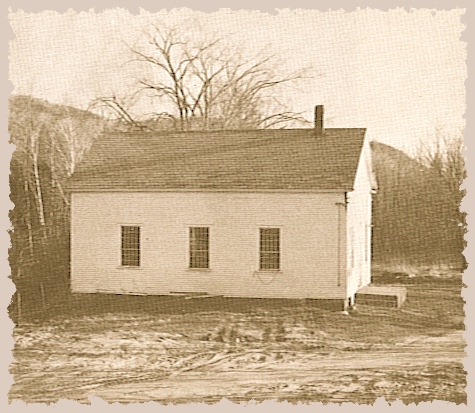
Stop by for coffee, treats, conversation and a tour of the Town Hall on Holden Road. This historic, iconic building is undergoing much-needed preservation. We would love to hear your stories.
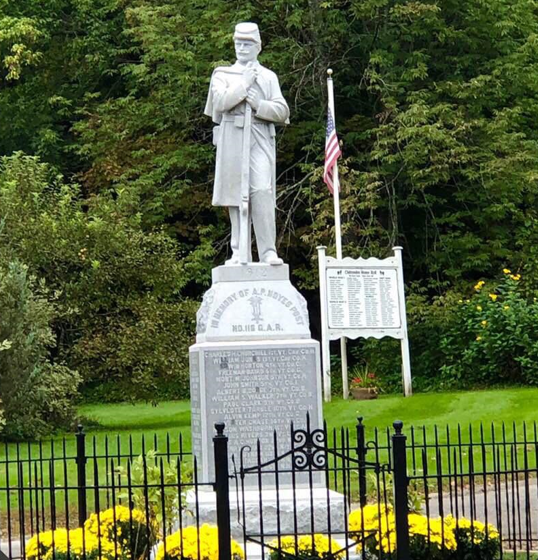
Chittenden Civil War Monument


A unique display of Chittenden buildings and some history along the way.
September 12 @ 9:00 AM – 11:30 AM
Stop by for coffee, treats, conversation and a tour of the Town Hall on Holden Road. This historic, iconic building is undergoing much-needed preservation. We would love to hear your stories.
August 8 @ 9:00 AM – 11:30 AM
Stop by for coffee, treats, conversation and a tour of the Town Hall on Holden Road. This historic, iconic building is undergoing much-needed preservation. We would love to hear your stories.
July 11 @ 9:00 AM – 11:30 AM
Stop by for coffee, treats, conversation and a tour of the Town Hall on Holden Road. This historic, iconic building is undergoing much-needed preservation. We would love to hear your stories.
June 13 @ 9:00 AM – 11:30 AM
Stop by for coffee, treats, conversation and a tour of the Town Hall on Holden Road, Chittenden, VT. This historic, iconic building is undergoing much-needed preservation. We would love to hear your stories.
The nine members of the Chittenden Historical Society gathered at the Grange Hall to present their treasures, finds and what-zits for a fun time of sharing and learning.
Bob Muzzy was the unanimous choice to lead off the evening. This was especially poignant because this year is the 50th anniversary of the founding of the Chittenden Historical Society and Bob was the first president. He shared the book, “Vermont Wilderness to Statehood, 1798-1791” written by Warren Dexter and Barbara C. Hanson. Bob then told the story of becoming acquainted with Warren Dexter whom he met when they both served on the Chittenden Bicentennial Committee in 1976. Warren was from Rutland. He was retired, his wife had died then Warren got to know people in Chittenden. There was a fellow (couldn’t remember his name) at Mountain Top who was interested in Chittenden history. Warren started digging around and found log books for Phineas Stevens from the 1700’s. These books described journeys and trails in Vermont and New Hampshire. Warren followed those trails and found the Indian trail that later became the Green Road. The Green Road is now a hiking trail determined through an agreement with the town in 2006 and which was upheld in 2025.
Bob and his family got to know Warren through his research. Warren was enthusiastic in his support that the town start the Chittenden Historical Society. Bob and his wife Gladys are charter members of the then large, active Chittenden Historical Society. The Society looks forward to honoring these founding members this year.
Marcia Lertola has a love of finding old bottles. She brought a milk bottle from the Proctor Creamery. Many longtime residents recalled deliveries from the Proctor Creamery. It seems at that time most local dairies had their own bottling operations and would deliver milk and cream in bottles stacked in wooden or wire crates.
Marcia also had a soda bottle from the Dominion Beverage Company. She had found it in the dirt under a tree next to her place of work in Brandon. Soda had been bottled by Louis Farrell & Company, later Farrell Distributors. Several of the locals chuckled over the find declaring that the spot had been a local hangout when they were teenagers. Sly grins indicated that there might be more than soda bottles there.
David Sargent brought a whatsit that had belonged to his father. This description probably won’t do it justice but it was a gadget to ream and grease fittings for machinery. The first guesses were some sort of drill but Bob Muzzy with his keen interest in old tools knew the answer. Dave confirmed it.
Elaine Meyers brought pictures of a very old and very large Christmas cactus that had belonged to her grandmother. She was tempted to bring the cactus itself but it was just too big. The Christmas cactus had bloomed every year. When her grandmother died family members were allowed to take pieces of it to grow for themselves. It had grown beautifully and Elaine set it out on the porch railing. The neighbor’s dog stole it and apparently gave it to the goat! The goat tore it up but Elaine was able to rescue a couple of pieces and resuscitate it. The cactus still needs to bloom but there are great hopes.
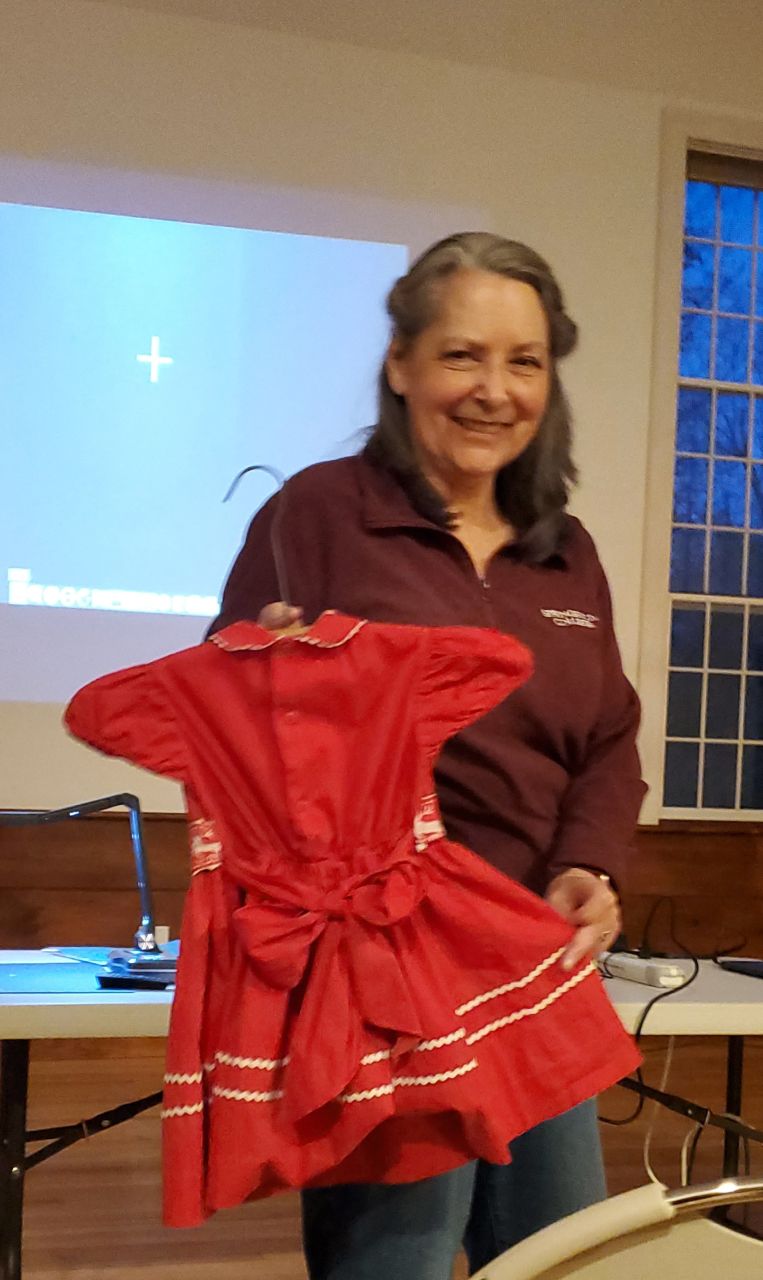
Molly Douglas had brought a very small red dress with reindeer embroidered decorative band on the front, a round collar, short, puffy sleeves and a sash tied in a bow. White rick rack trim was added to the collar and the hem of the gathered skirt. This had been Molly’s dress when she was about five or six years old. She shared that the dress had probably been worn to school daily since she only had about three dresses. Girls were not allowed to wear pants to school. Several of the women nodded in agreement and shared that dressing for winter outdoor play could be a process where the bulky snowpants were pulled up while the skirts were stuffed into the pants then suspenders put over the shoulders. Heavy jackets were worn over that with hand-knitted hats and mittens and rubber galoshes. None of the warm, light-weight fabrics were available then. Elaine observed the slightly worn line on the hem and surmised that the skirt had been shortened then let down as Molly grew taller. Bob Muzzy added that “you grew some since then!”
Martha Welch shared a message against alcohol consumption written and delivered by the Reverend S.M. McLaughlin from the pulpit. According to a quick AI search: Reverend S.M. McLaughlin was a late 19th-century Methodist Episcopal pastor best known for his time leading the church in Rutland, Vermont in the 1890s.
A quick AI search found this information:
Vermont had Prohibition from 1852 to 1892. There was a bottle from Fred Flynn who was a bootlegger and had the largest cache of liquor. Marcia observed that there is some evidence of a still near her home. Bob said that there were stills all over the place.
Steve Welch had brought two items and challenged everyone to identify them. Most readily identified the rug beater but were puzzled about the second. Several said that rug beaters could come in all different sizes and could be quite ornate. Steve finally ended the puzzlement about the second item. It was a laundry lifter used when the laundry used to be done in a large kettle in the back yard. The lifter was used to lift the hot, wet laundry from the kettle to hang on the clothesline. Both items had belonged to and been used by his grandmother.
Members had refreshments, took closer looks at the items and had discussions about them before ending the happy evening.
Scattered showers did not dampen the reverent spirit of the dozen citizens who gathered at the Honor Roll Park by the Monument for a brief flag ceremony presented by Chittenden Historical Society President Steve Welch and Pastor David Smith.
Following the flag ceremony attendees drove to the Chittenden Grange Hall for the extended program. A total of twenty were present to pay their patriotic respects to those brave men and women who have died in service to their country. They were welcomed by the sound of patriotic melodies presented by Martha Welch on keyboard.
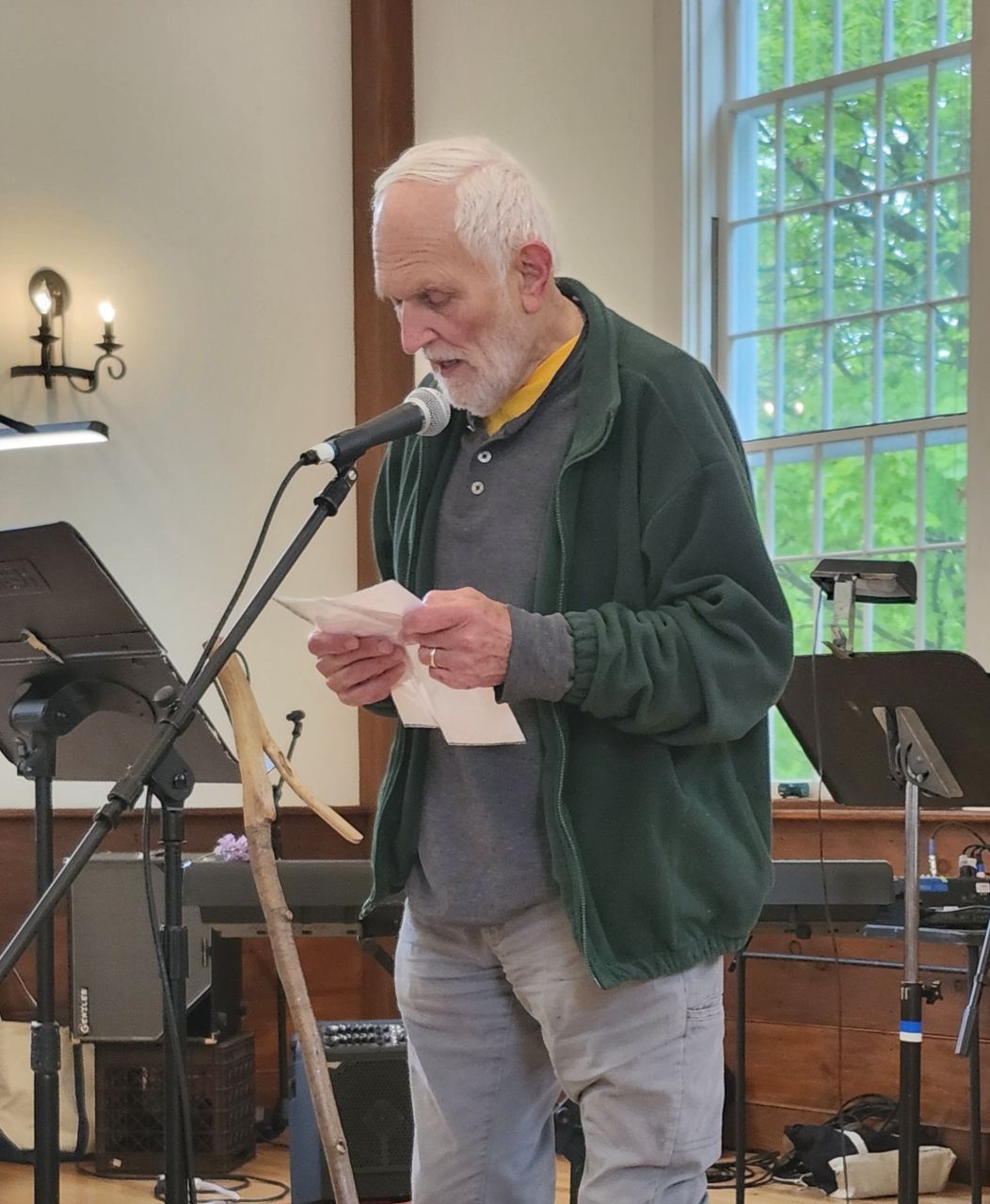
President Steve Welch welcomed all and introduced Chittenden Historical Society members and musicians Bruce and Molly Douglas. They presented a USA song, “This Land is Your Land” by Woody Guthrie and a Vermont song, “The Hills that I Call Home” by Robert Ames and the Front Range.
Joseph Meyers read Abraham Lincoln’s “The Gettysburg Address”. This address has become a much-loved tradition for Chittenden since Robert Webster began reciting it by heart. Joseph then introduced the Call to Colors/Flag Ceremony.
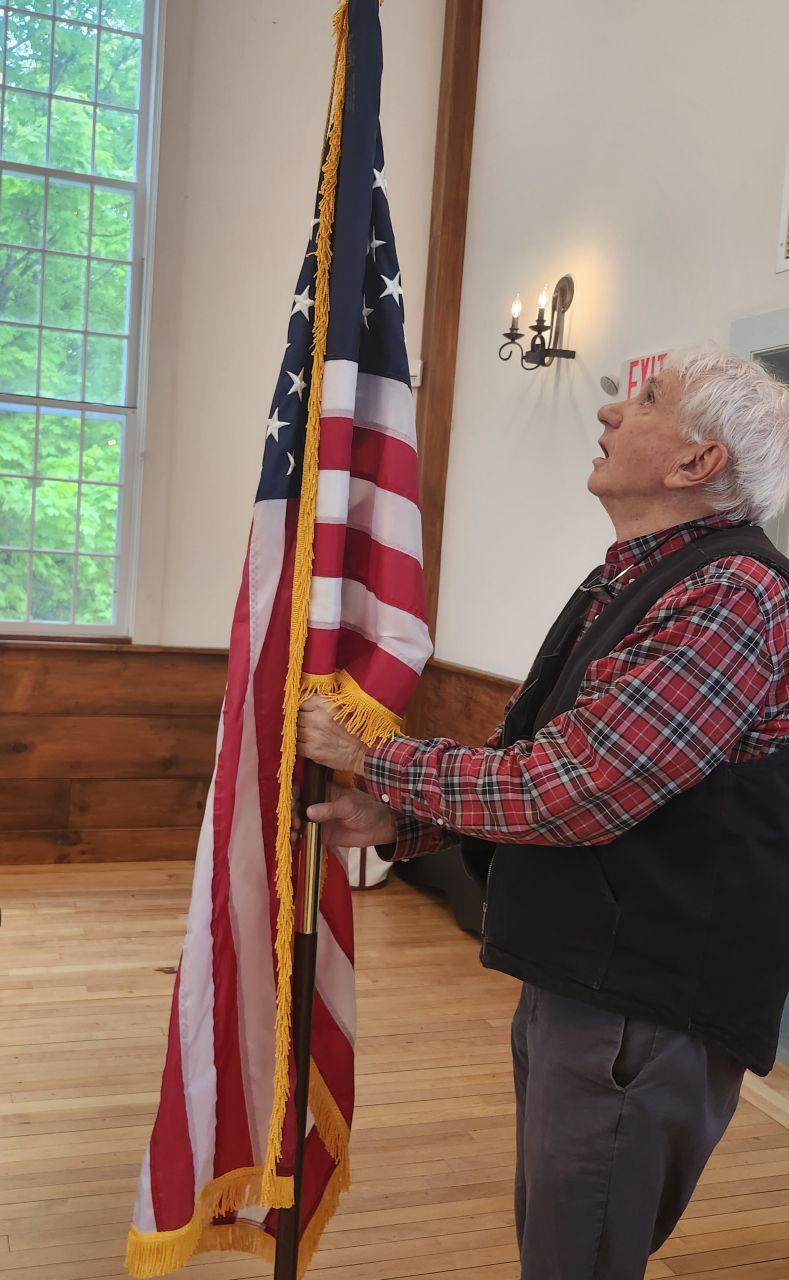
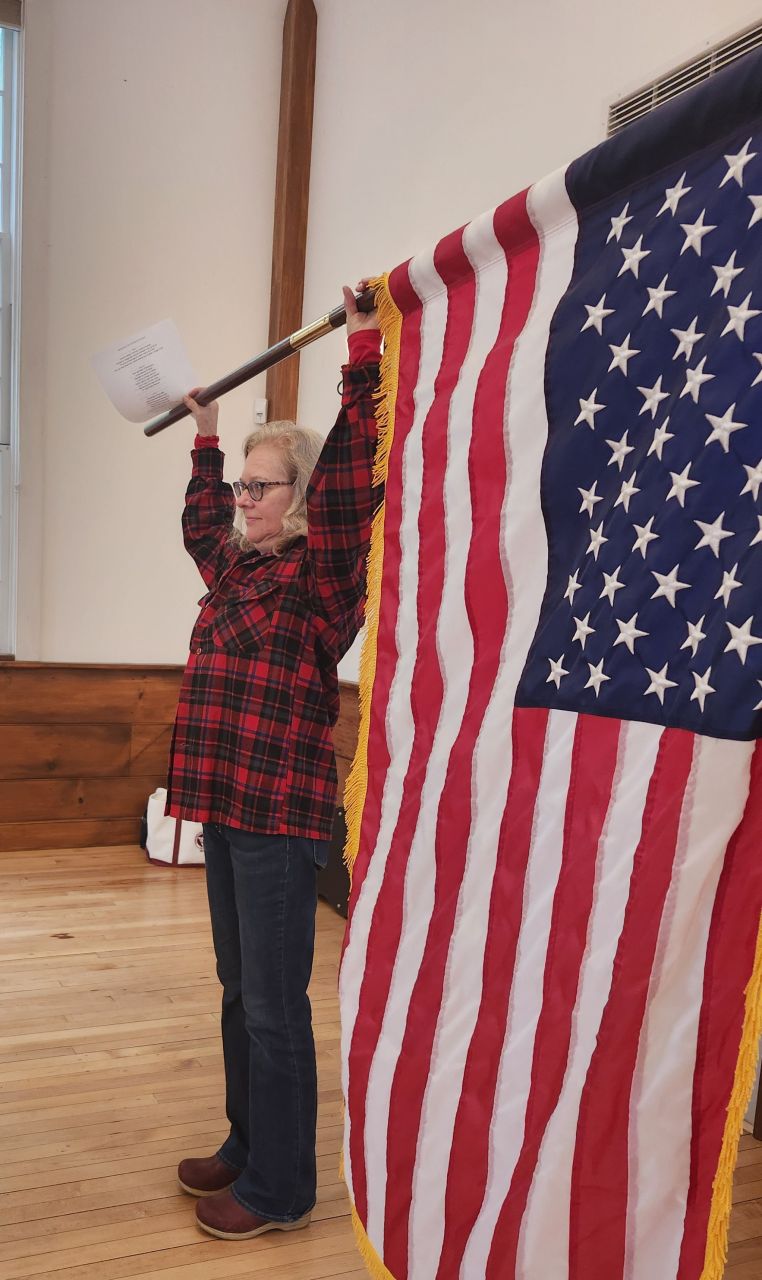
Pastor David Smith and Steve Welch brought the Stars and Stripes forward. While Rebecca Kerns tipped the flag and held it high all recited The Pledge of Allegiance. Steve Welch played Taps on his trumpet. David and Steve then retired the colors.
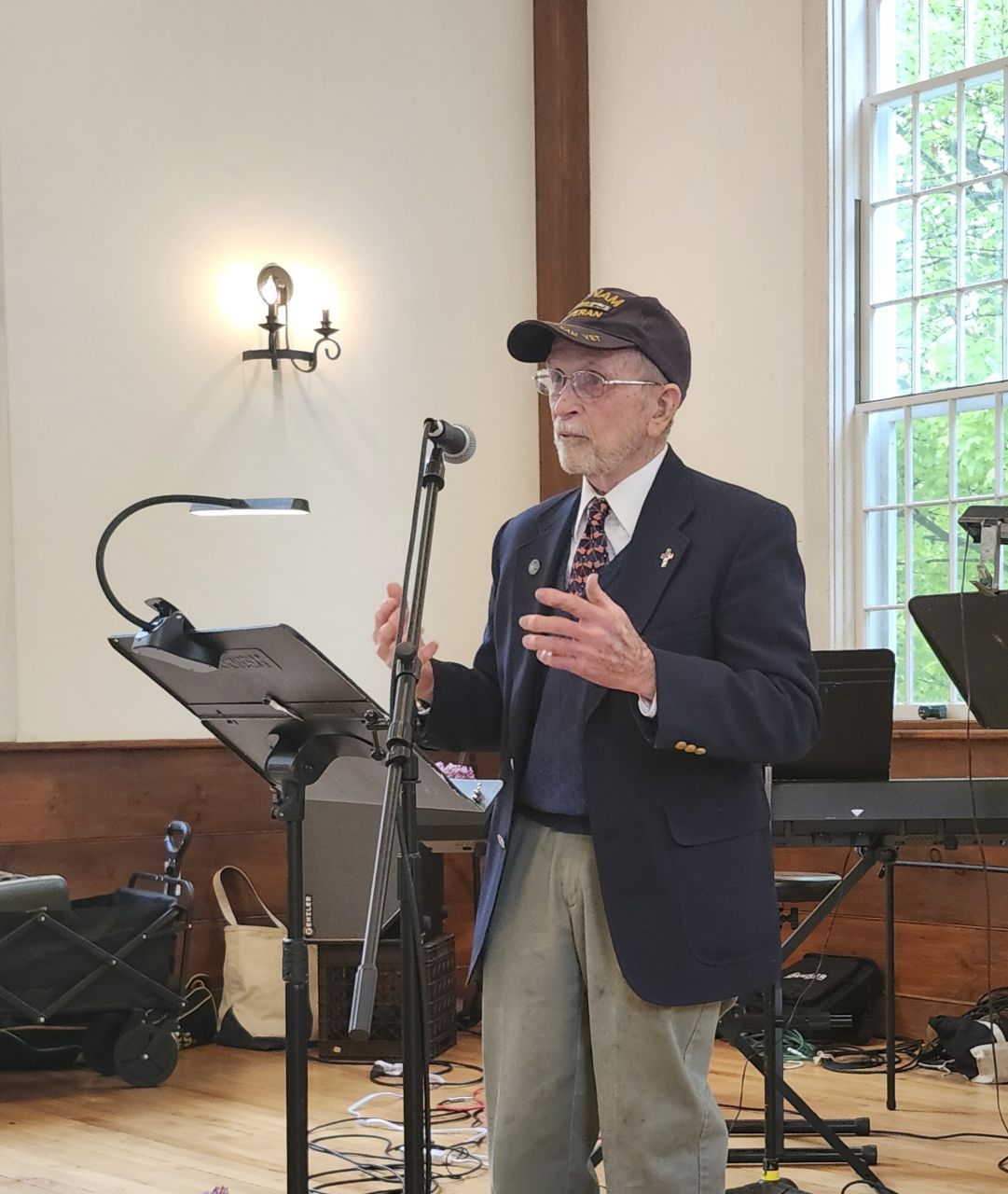
Steve then introduced the keynote speaker, David Sargent. David is a Chittenden native who served in the United States Army in Viet Nam. He is widely-traveled and has served the Town of Chittenden for many years. David’s address was directed to the 1300 residents of Chittenden. He said that Peace, Liberty and Daily Security are not free. Chittenden men and women in addition to many, many others in the United States have paid the price through thirteen wars, including 911. Brave men and women who answered the call came from ordinary lives doing extraordinary things and paid the ultimate price. They wanted to come home. We are very blessed to call the beautiful State of Vermont home.
The Civil War statue has stood for more than a century is testament. The Community Honor Roll is there for the townspeople to view. It reminds us to live lives worthy of the sacrifice, remember and honor, pass along to the next generation and build community. A final thought, pause, look at the flag and think of those who died. Never Forget.
Pastor Smith also addressed those assembled. He shared that he had read “The Battle Cry of Freedom”, by James MacPherson recently. The books cites the numbers of those who have died in wars. This can become overwhelming and it is easy to think that we are not significant and don’t matter. However, Psalm 23 tells us that we do have value. We are guided, cared for even in the darkest times, and we are always loved.
He called for a Moment of Silence. This was followed by a prayer of praise that we do matter and extorting leaders to please lead us.
Bruce and Molly Douglas provided another set of songs. “I Hear Them Old Green Mountains Calling Me” by Molly’s childhood friend, Gayle Keyes. The song is reminiscent of their childhood in the Battenkill Valley of Vermont. This was followed by “America, the Beautiful” by Katherine Lee Bates and Samuel Ward which everyone joined in singing.
Martha Welch presented the History of the Lilacs. At the close of the Civil War Decoration Day was established for the end of May. In the Northeast lilacs are often in bloom at that time so they were used extensively. Those who lived near bodies of water adapted the tradition to honor sailors who were lost at sea. People would march to a bridge, say a prayer and cast the lilac blooms into the water. The tradition was highly influence by Walt Whitman’s elegy “When Lilacs Last in the Dooryard Bloom’d”. Martha shared lilac blooms that she had gathered in her neighborhood for attendees to take with them and cast them into the water.
The service concluded with the Salute to the Services. Everyone sang the songs of the Armed Services including “The Army Goes Rolling Along”, “A Salute to the United States Coast Guard”, “The U.S. Air Force”, “Anchors Aweigh” and “The Marines Hymn”.
Afterward everyone enjoyed refreshments and fellowship.
by Steve Welch
The dry summer we have just experienced was worrisome for those of us who have wells and browning lawns; but it was a lucky break for the progress of stabilizing the Town Hall. Because of the lack of remain, we were able to completely pump out the cellar hole that for nearly 40 years has been a five foot deep cistern of ground water beneath the floor of the front section of the building.
Dark, dangerous, and devoid of any practical use to the functioning of the structure, the pit was kept under lock and key behind a padlocked door located under the staircase to the second floor. When the Town Hall was originally built, a smaller version of it existed under the front section of the building. Sometime around the end of the 19802 and beginning of the 1990s, the hole was further excavated to provide a proper place to relocate the furnace that was on the first floor. Unfortunately, it was soon discovered that a high water table level quickly filled up the newly re-dug cellar. So, the furnace had to remain on the first floor and the cellar option was abandoned.
After years of not having any good ideas of how to solve the cellar water problem, we decided to fill in the space with crushed rock, top it off with a plastic liner, and so raise the cellar floor up to the level of the surrounding 32-inch height that exists under the rest of the Town Hall (which has remained high and dry above the incoming water).
The work was done on October 27 and 28 by the Tom Grace Company. It took about 40 yards of stone to do the job. We fashioned a sump pump casing from a plastic culvert remnant obtained from the town garage. This was installed as the crushed rock was run down from the dump truck into the cellar using a pair of old coal chutes.
On Tuesday, November 5th, the Town Hall building began the first stage of mold remediation. Craig Pelkey and his technicians came up and fumigated the building. The next step was to get the furnace back up and running so that the building would be heated over the coming cold weather months. This happened on Monday, December 1st, and the building first floor has been kept warm a dry through the past three months.
After some more cleaning, re-hanging of the curtains, and a little floor repair, we were ready to invite a group of folks from the Wednesday Seniors’ Coffee group at the Grange to come down to the Town Hall to see the inside of the building. Around 10:45 AM on February 11th, they saw for themselves what we have on the first and second floors of this historic 1895 structure. The following Tuesday, February 17th, we invited the Chittenden Volunteer Fire Department to come over from their weekly 6:00 PM meeting for a short slide show and homemade pies with cider and coffee. They had previously started the clean-out with us as we prepared for the mold remediation back in the fall. Both groups were able to view our painted curtain depicting a Civil War scene. This historic artifact is one of the precious few in New England that remain intact in their original setting. We plan to have more tours open to the townspeople in the spring and summer.
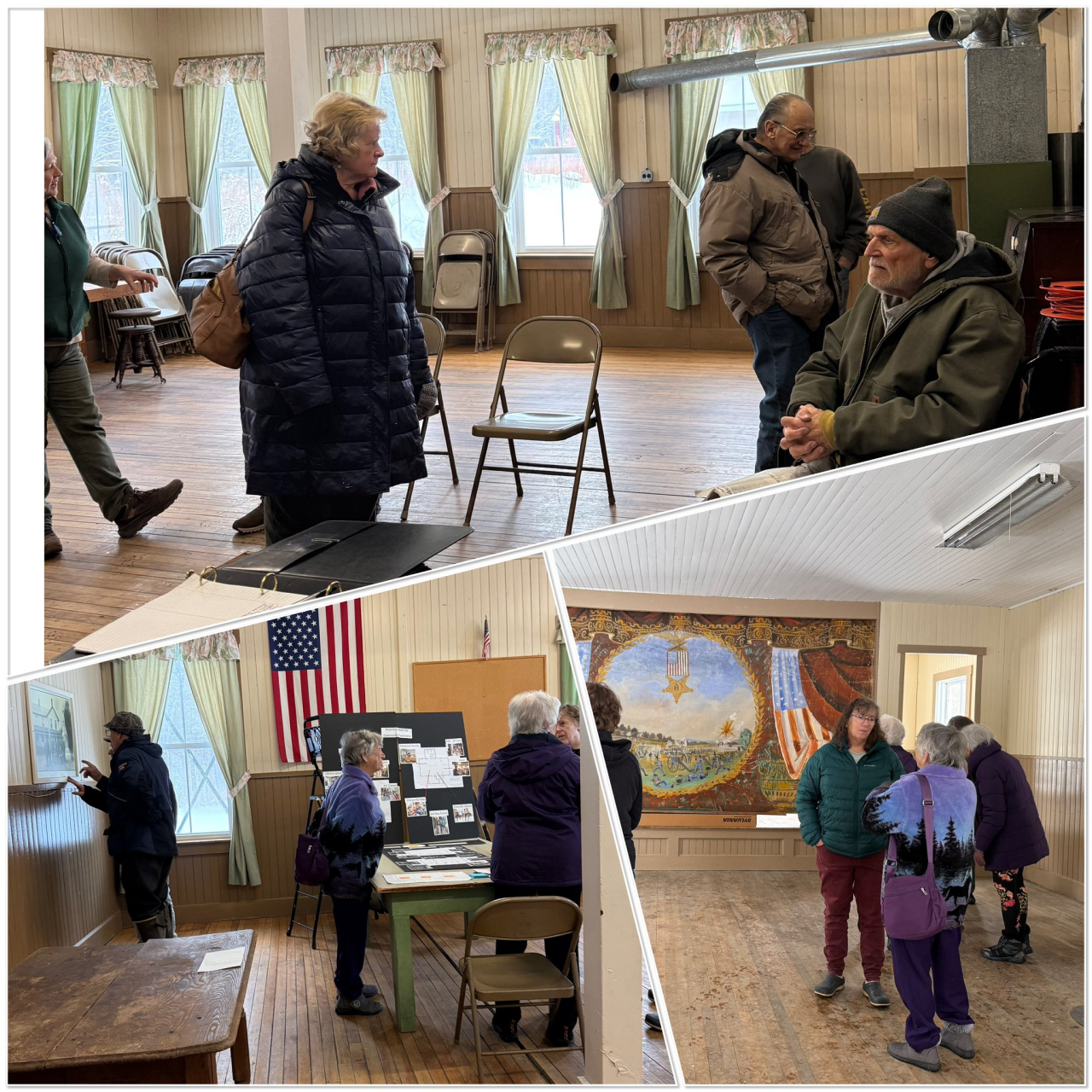
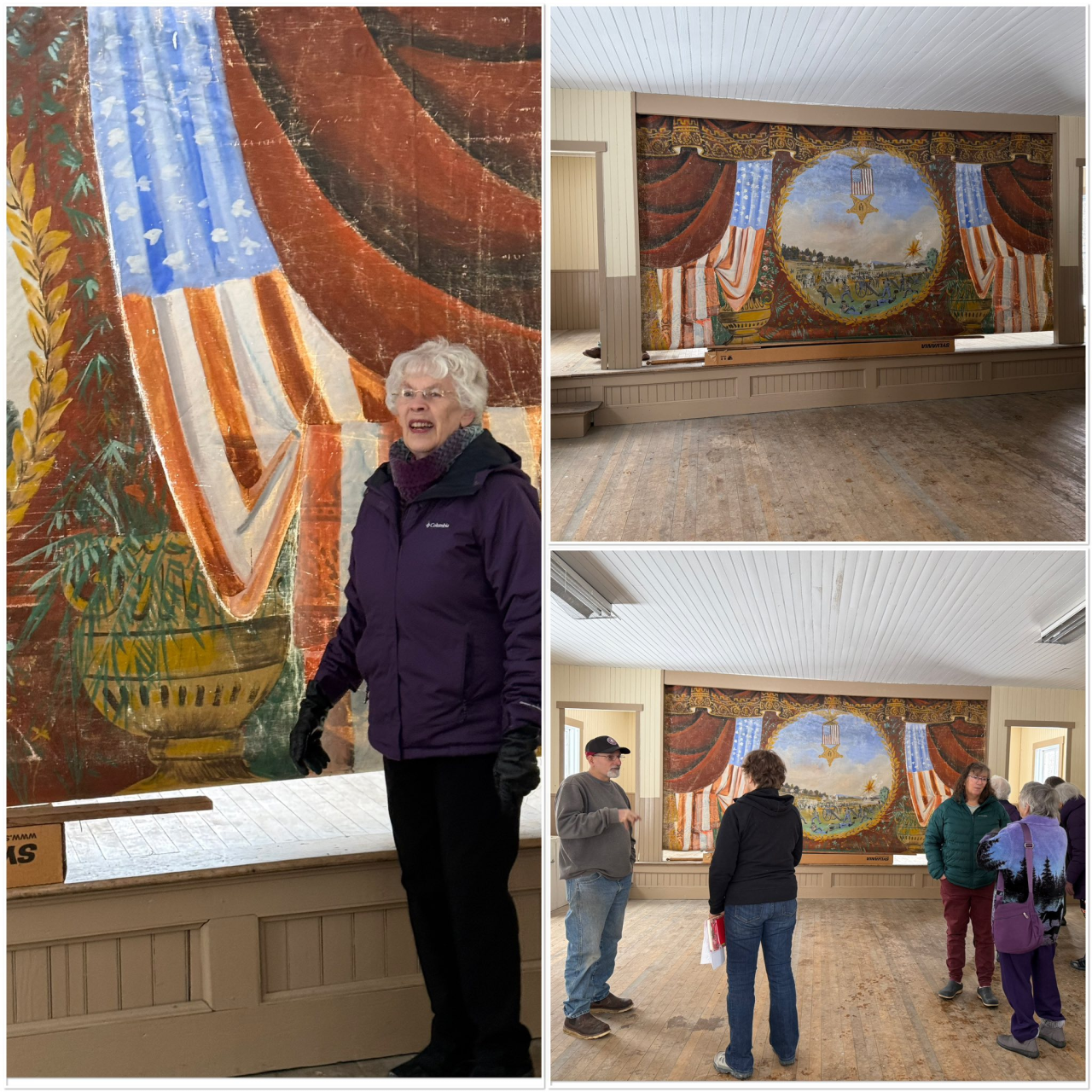
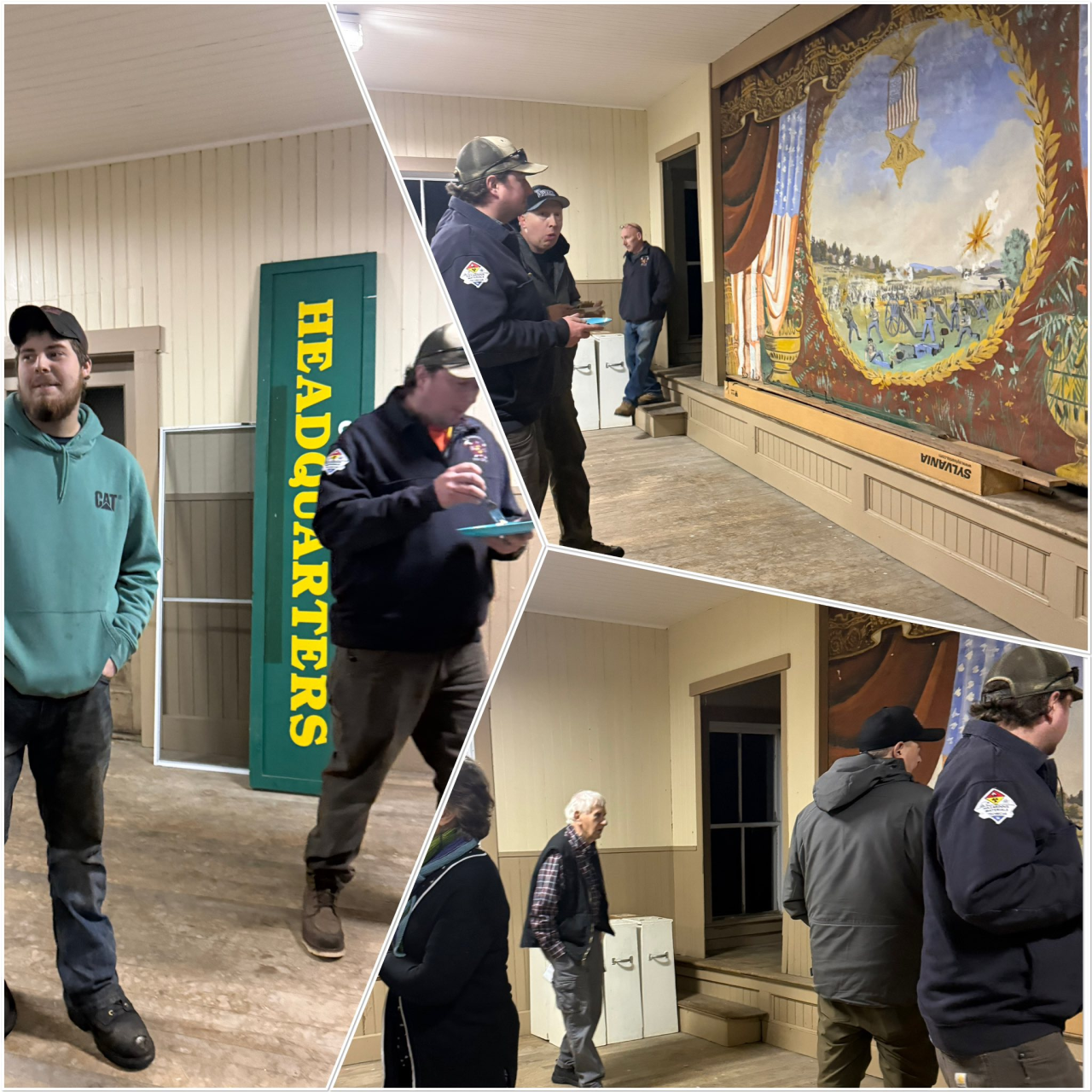
Good works deserve pie! Thanks Fire Department.
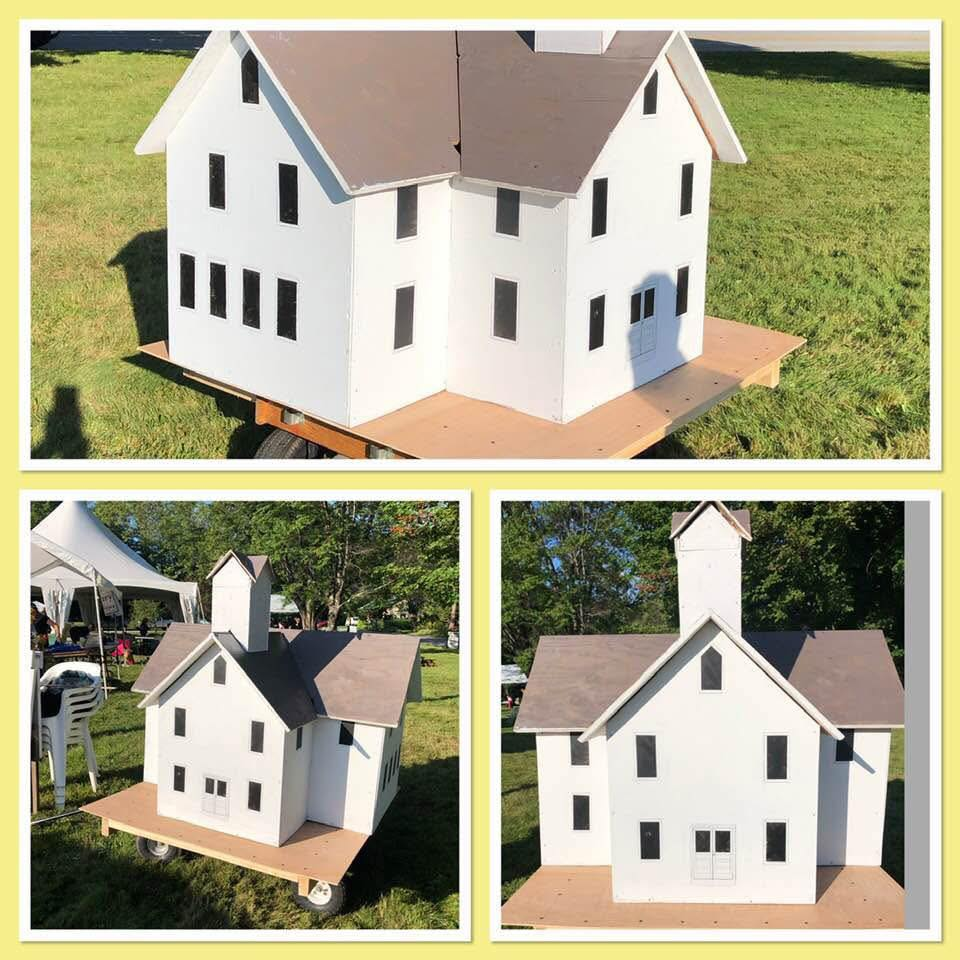
Chittenden Day August 23, 2025. Model of the Town Hall presented by Friends of the Town Hall and the Chittenden Historical Society.
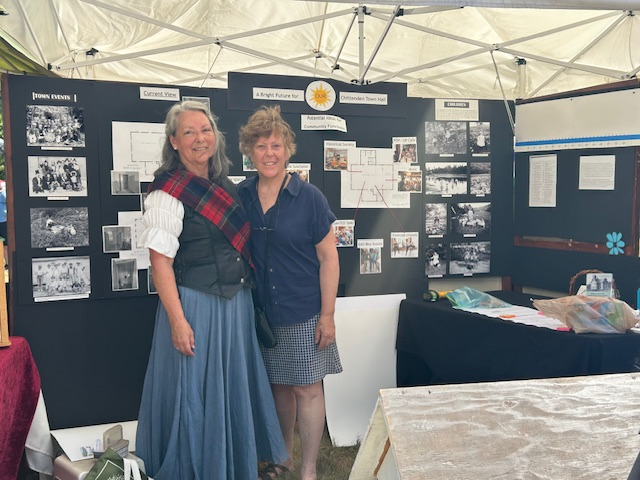
Chittenden Day, August 23, 2025. Molly Douglas and Laurie Wilson with the Friends of the Town Hall display.
As of June 20, 2025, we have sent out two grant applications. Money from grants will help to install heat pumps and allow for an upgrade of the electrical system. They will also help pay for the engineer’s inspection concerning water in the basement.
To donate to the Town Hall fund, make checks payable to Chittenden Historical Society and on the memo note indicate “for Friends of the Town Hall Project”.
A Little History
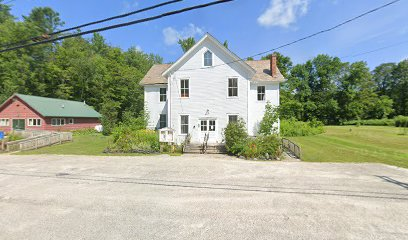
This year is the 245th birthday of our Township whose charter was granted to Gershom Beach and 65 other “associates” on March 14, 1780. For more than half of these 245 years, the Town Hall building has stood at the center of our community in the Historic District on Holden Road. Serving as the district #5 school after it was built in the 1890s until Barstow School opened in the early 1930s, it has also been the town clerk’s office and a meeting hall for official and nonofficial town gatherings right up to the COVID epidemic of the early 2020s.
We have enjoyed very good use out of this old building with relatively little investment in its maintenance. In 1998, a comprehensive plan was put forth for “the continuation of the upkeep of the structure including planning for the future by improving handicap accessibility, maximizing space for the Historical Society, and upgrading the mechanical and fire protection systems.”
Charles A. Parker was the author of the report after his site visit to the Chittenden Town Hall on December 19, 1997. His work was funded, in part, by the Preservation Trust of Vermont. Following a four-page account detailing the foundation, frame, interior, exterior, and roofing of the building’s then current condition, he proposed a prioritized list of three phases of repair and their estimated 1998 cost which totaled $114,600.00 (in 1998 dollars).
In the years since the Parker report, only a few significant improvements have been made. The windows on the ground floor and the three gable windows in the attic half story have been replaced. The building’s exterior got a double coat of paint which helped seal in the original 2nd story windows until such time as they might also see replacement.
Friends of the Town Hall
A small group of Historical Society volunteers got together to form “Friends of the Town Hall.” Their goal is to insure the stabilization of maintenance of the Town Hall, have it brought up to code, and made available again for the use of the Town’s people. The Historical Society members voted at our Fall 2024 meeting to support these goals and to channel any grant money through our 501c3.
The Friends of the Town Hall (FotTH), under the leadership of Laurie Wilson, has sought permission to accept grants that would be put toward the Town Hall improvements. They also brought up concerns to the Select Board about the lack of heating and ventilation adding to some mold growth.
Chittenden Civil War Monument